Electrical resistance is the opposition that current meets as it flows through an electrical circuit. That opposition slows the flow of electrons and, as a result, part of the electrical energy is turned into heat. This phenomenon, known as the Joule effect, is the basis of every electric heater, including the tubular heater, the most widely used heating element in industry.
How does an electric resistance heater work?
When current flows through a conductor, electrons collide with the atoms of the material. The higher the conductor’s resistance, the more energy is lost in those collisions and the more heat is generated: the power dissipated is proportional to the resistance and to the square of the current (P = I² · R). That is why heating elements are made of high-resistivity alloys that can get hot without deteriorating.
Where do we find electric resistance heaters?
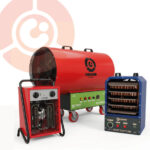
They are found in almost every appliance or machine that uses electricity to produce heat.
Household
- Heat guns.
- Electric showers.
- Electric space heaters and grills.
- Toasters.
- Water heaters.
Industrial
- Water heating.
- Heating of fluids and oils.
- Air and gas heating.
- Pipe temperature maintenance (heating cables).
Electric heaters in industry
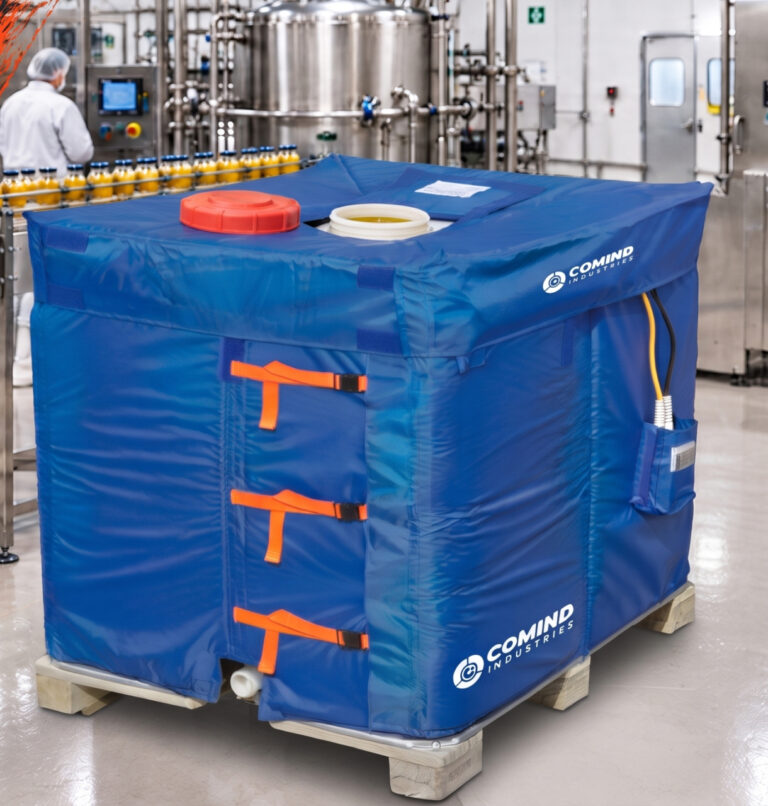
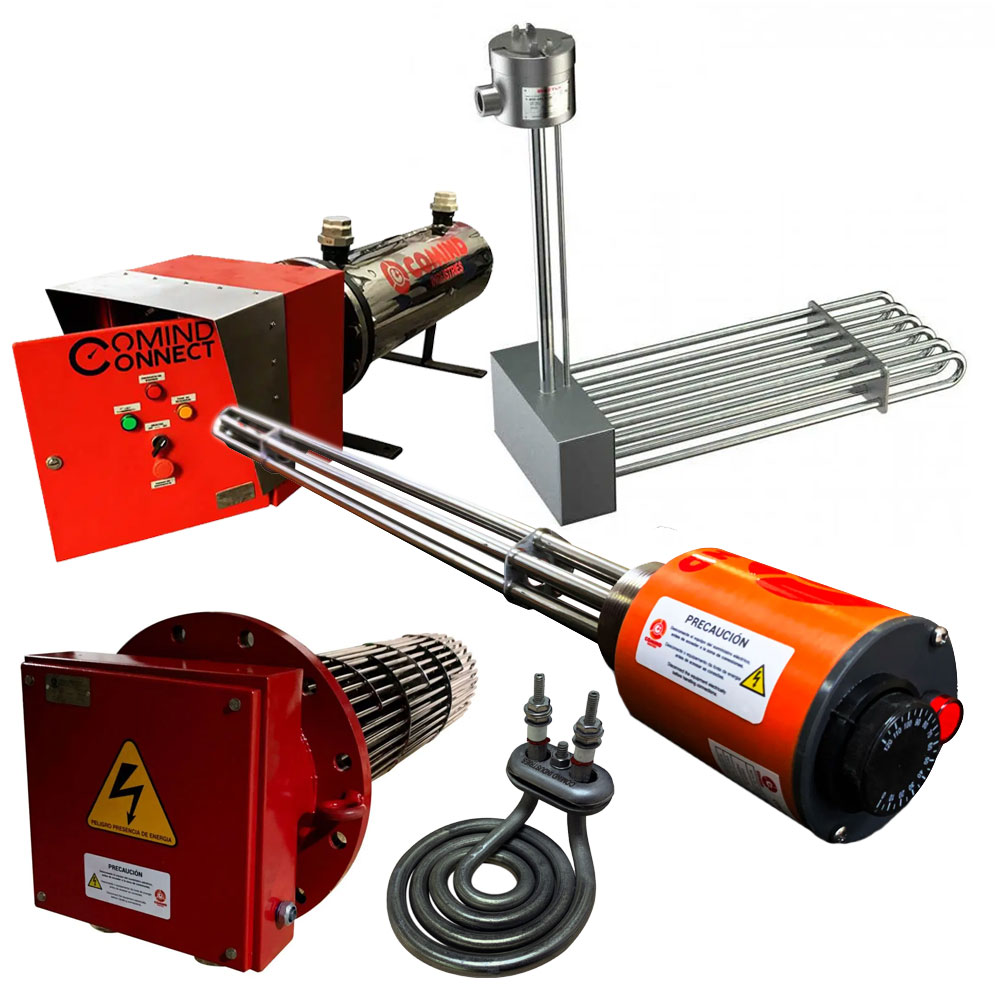
Comind Industries specializes in manufacturing industrial electric heaters for sectors such as mining, agribusiness, food and petrochemicals. Over more than 30 years, the most widely used type of heating element in industry has been the tubular heater, found in immersion heaters, unit heaters, ovens and process equipment.
What is a tubular heater?
A tubular heater is a resistance wire placed at the center of a metal tube and electrically insulated from it by compacted mineral powder. The result is a rugged element that can be bent into many shapes and operate immersed in liquids, in air or embedded in metal parts. Its three main raw materials are:
Nickel-chromium wire
Nichrome wire is an alloy of nickel (80%) and chromium (20%) with high resistivity and excellent oxidation resistance, making it an ideal conductor for stable heat generation.
Stainless steel sheath
Stainless steel tubes resist corrosion, oxidation, erosion and high temperatures far better than most metals. Depending on the fluid and temperature, other materials such as copper, Incoloy or titanium are also used.
Magnesium oxide
Magnesium oxide (MgO) is the most widely used electrical insulator in compacted heating elements. It combines high thermal stability, good heat conductivity and high electrical resistivity at temperatures close to 1,000 °C. That is why it is also used in mineral-insulated cables and in the manufacture of thermocouples and RTD sensors.
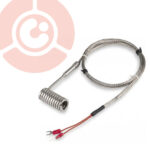
For low-power applications and tight spaces, small-diameter versions are also used, such as our micro-tubular heaters.
Need a tubular heater for your process?
We manufacture custom tubular heaters in any wattage, voltage, length, shape and material. Contact us for personalized advice on your project.