What is viscosity and why is it a problem in industrial processes?
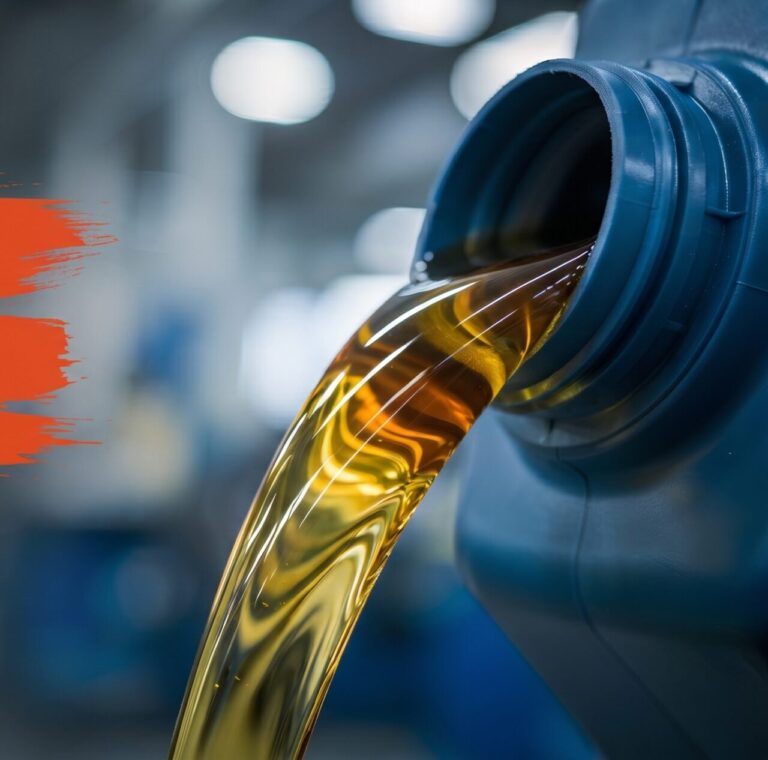
Viscosity is a physical property that describes a fluid’s resistance to flow. Put simply, the more viscous a liquid is, the thicker and harder to move it becomes. This directly affects industrial processes that involve pumping, mixing, transfer or filling.
Fluids such as oils, greases, waxes, adhesives, silicones, molasses, honey, pitch, inks and chemicals tend to become more viscous at low temperatures, making them hard to handle, especially when stored in 55-gallon (200-liter) drums or 1,000-liter IBCs (Intermediate Bulk Containers).
Handling these materials in cold conditions can interrupt production, damage pumps, cause downtime and increase waste.
How temperature affects the viscosity of industrial fluids
The relationship between temperature and viscosity is inverse: the higher the temperature, the lower the viscosity. Heat reduces the internal friction between the fluid’s molecules, making it easier for them to move.
This principle is critical in:
- Transfer of oils and lubricants
- Processing of honey and syrups
- Dosing of dense chemicals
- Dispensing of resins, paints and inks
- Manufacturing of personal care and cosmetic products
If these fluids are not heated properly, they can partially solidify, causing deposits, blockages or product loss. This is where high-temperature heating blankets play a vital role.
What are high-temperature heating blankets?
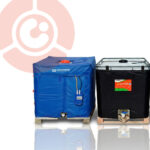
Heating blankets are flexible devices designed to wrap around containers and apply heat evenly. They consist of:
- Internal heating elements (electric resistance heaters)
- Thermal insulation
- A protective outer layer of fiberglass or reinforced silicone
- Hook-and-loop closures or adjustable straps
- A manual or digital temperature controller
High-temperature heating blankets are versions designed to reach more than 120 °C (248 °F), ideal for heavy fluids or those that need more thermal energy to lower their viscosity.
How do heating blankets work on drums and IBCs?
Once wrapped around the drum or IBC, the heating blanket raises the temperature of the fluid by thermal conduction. This makes it possible to:
- Heat the contents from the walls toward the center
- Avoid hot spots or localized overheating
- Keep the fluid flowing steadily throughout the process
- Minimize product loss from residue stuck to the walls
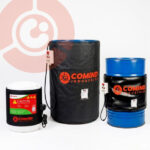
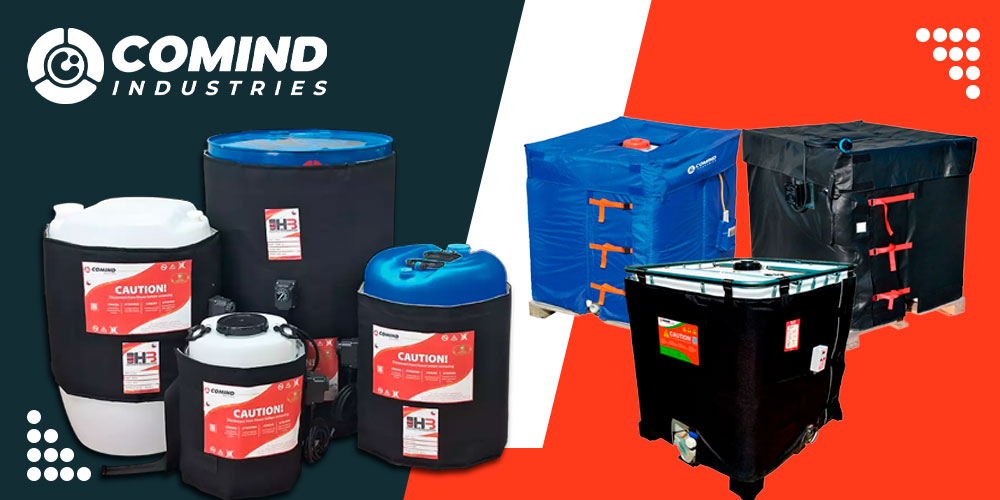
At Comind Industries we manufacture heating blankets for metal drums, plastic drums and IBCs, adapting wattage, size, voltage and controls to each customer’s requirements.
Common applications: which fluids need heating blankets?
The industries that use high-temperature heating blankets the most are:
- Food and beverage: honey, molasses, chocolate, syrups
- Cosmetics and pharmaceuticals: creams, gels, extracts, essential oils
- Chemicals: adhesives, sealants, silicones, paraffins, resins
- Oil and lubricants: greases, industrial oils, waxes
- Inks and paints: dense solvents, pigmented emulsions
In all these cases, the goal is to keep the right viscosity for processing, pumping, mixing or filling.
Benefits of using heating blankets to reduce viscosity
- They prevent partial or total solidification of the fluid
- They improve flow without altering the product’s chemical composition
- They make it easier to fully empty the drum or IBC
- They prevent premature wear of pumps and valves
- They improve energy efficiency by applying heat exactly where it is needed
- They reduce waiting time before processing
They also provide uniform temperature distribution without the need for space heating or bulky equipment such as ovens or heating chambers.
How to choose the right heating blanket for drums and IBCs
Before selecting a heating blanket, consider:
- Container size and type: standard 200 L (55 gal) drum, 1,000 L IBC or special formats
- Target temperature: do you need to hold temperature or heat up from cold?
- Available voltage: 120 V, 220–240 V or three-phase systems
- Type of fluid: density, heat sensitivity, melting point
- Type of control: manual thermostat or digital system with sensor
- Working environment: humid or dusty areas, or explosive atmospheres
At Comind Industries we design custom heating blankets, ensuring compatibility with the process and operator safety.
Standard vs. high-temperature heating blankets
| Feature | Standard blanket | High-temperature blanket |
|---|---|---|
| Temperature range | Up to 90 °C (194 °F) | Up to 200 °C (392 °F) or more |
| Typical use | Temperature maintenance | Active viscosity reduction |
| Target fluid | Honey, light oils, water | Waxes, adhesives, silicones, greases |
| Control | Basic manual | Digital with sensor and thermal protection |
| Material | Standard silicone | Reinforced fiberglass fabric |
High-temperature blankets also offer better insulation, greater durability and tolerance to demanding operating conditions.
Safety, efficiency and certifications in industrial heating blankets
Comind Industries industrial heating blankets feature:
- Certified connectors (CE, UL, IEC)
- Overheating protection
- Fire- and chemical-resistant materials
- Touch-safe surface for manual handling
- IP-rated options for outdoor or wet locations
They are also designed for continuous duty, with long thermal cycles, without losing efficiency or compromising safety.
Comind Industries: custom thermal solutions for difficult fluids
With more than 30 years in industrial heating, at Comind Industries we develop solutions tailored to our customers’ real needs. Our heating blankets for drums and IBCs offer:
- Custom manufacturing (wattage, size, connectors)
- Compatibility with automation systems
- Models for international shipping
- Lead times adapted to your production schedule
- Technical support for selection and installation
Conclusion: heating blankets to keep your processes flowing
Reducing the viscosity of dense fluids in drums or IBCs is not just a thermal problem; it is key to operational continuity, cost savings and final product quality.
Comind Industries high-temperature heating blankets offer an efficient, safe and customized solution for any industry working with complex or cold-sensitive materials.
Whatever your thermal challenge, we have the right solution for your process.