What is a thermocouple and what is it used for?
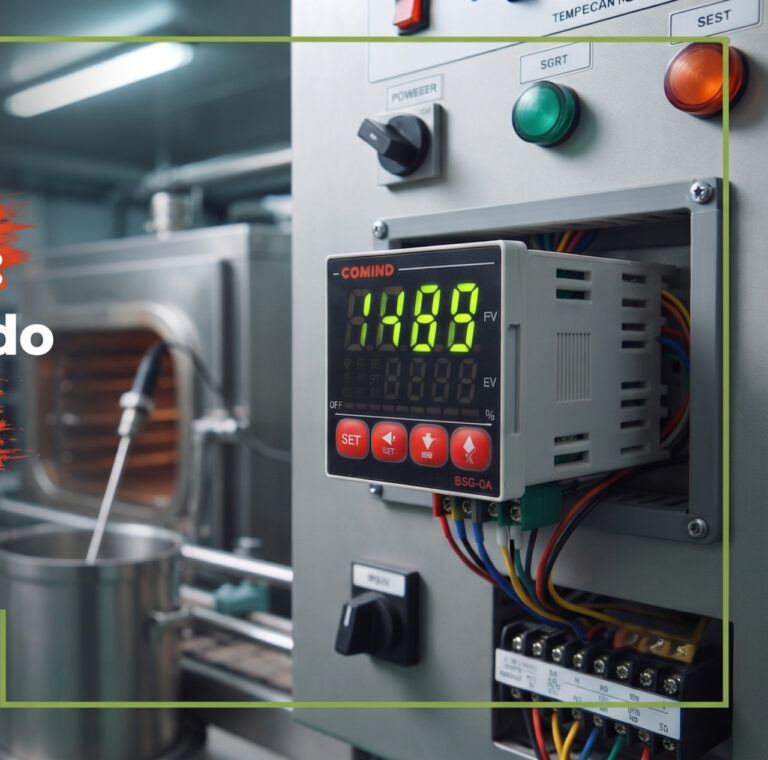
A thermocouple is a temperature sensor that converts heat into a measurable electrical signal. It is widely used in industrial, scientific and household applications thanks to its reliability, low cost and ability to operate over a wide temperature range.
It consists of two dissimilar metal conductors joined at one end (the hot junction). When there is a temperature difference between that point and the other end (the cold junction), a voltage proportional to that difference is generated.
At Comind Industries we manufacture thermocouples for demanding industrial use, with durable materials and specific calibrations. Our experience in heating and thermal control has led us to develop precise, durable temperature measurement solutions tailored to each process.
Most common thermocouple types in industry
Different pairs of metals are used to make temperature sensors, and they define the thermocouple “type”. The most common include:
- Type K (chromel-alumel): the most widely used, covers -200 °C to 1,200 °C.
- Type J (iron-constantan): ideal for temperatures up to 750 °C.
- Type T (copper-constantan): excellent for low-temperature measurement.
- Type E (chromel-constantan): higher sensitivity.
- Type N (nicrosil-nisil): good stability at high temperatures.
- Types S, R and B (platinum): for critical applications such as foundries and laboratories.
Each type has specific advantages depending on the temperature range, stability, cost and chemical environment of the process.
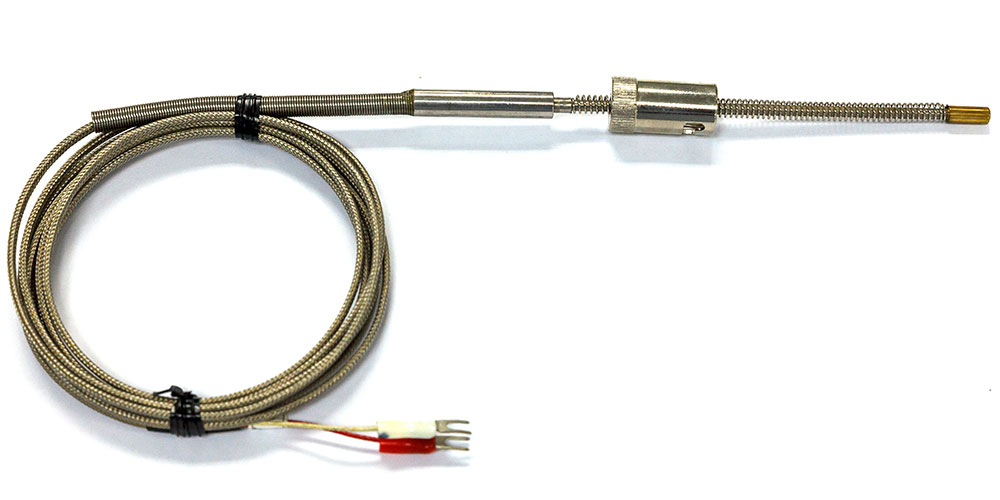
Differences between type J, K, T, E and other thermocouples
The choice of thermocouple type depends on:
- Temperature range
- Process atmosphere (oxidizing, inert, corrosive)
- Long-term stability
- Required accuracy
- Cost
For example:
- Type K is ideal for furnaces, industrial thermal processes and electric heaters.
- Type J is used in more controlled or medium-temperature processes.
- Type T is common in the food industry and laboratories where sensitivity at low temperatures is needed.
At Comind Industries we help our customers choose the most suitable type for their process, reducing measurement errors and maximizing sensor life.
Advantages of thermocouples over other temperature sensors
Compared with sensors such as RTDs or thermistors, thermocouples offer key advantages:
- Wide temperature range
- Fast response
- Resistance to aggressive environments
- Lower manufacturing cost
- Durability in industrial applications
Being simple and versatile, thermocouples are also easy to integrate into automatic control systems, electrical panels or directly into machinery.
How to install a thermocouple correctly
Correct installation ensures reliable measurement and extends sensor life. Best practices include:
- Place the measuring point in the critical zone of the process.
- Use a protective sheath or thermowell if there is contact with aggressive fluids.
- Avoid long cable runs without signal compensation.
- Use extension or compensating cable of the same type as the thermocouple.
- Connect the cable with the correct polarity (positive and negative).
- Ensure a good connection to the control system (PLC, display, data logger).
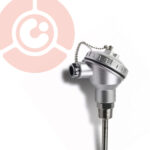
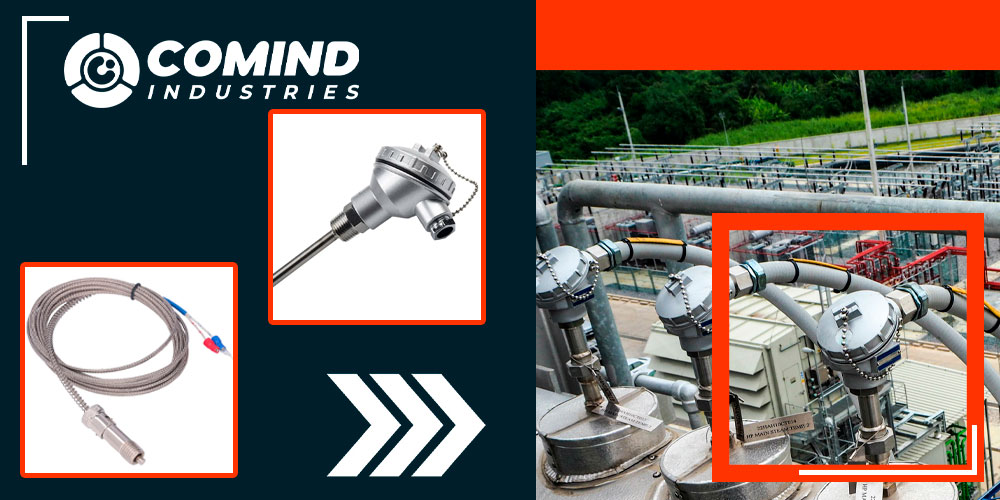
For processes such as furnaces, pressurized tanks or industrial ducts, we recommend mineral-insulated sheathed thermocouples or rugged metal connection heads, like the ones we manufacture at Comind Industries.
Common industrial applications of thermocouples
Thermocouples are used in virtually every industrial sector. The most common include:
- Mining and foundry: measuring molten metals or hot gases.
- Food: ovens, cooking tunnels, industrial refrigeration.
- Chemical and pharmaceutical: temperature control in reactors.
- Energy: turbines, thermal systems, boilers.
- Oil and gas: monitoring processes in hazardous areas.
- Plastics and extrusion: injection molding, thermoforming, extruders.
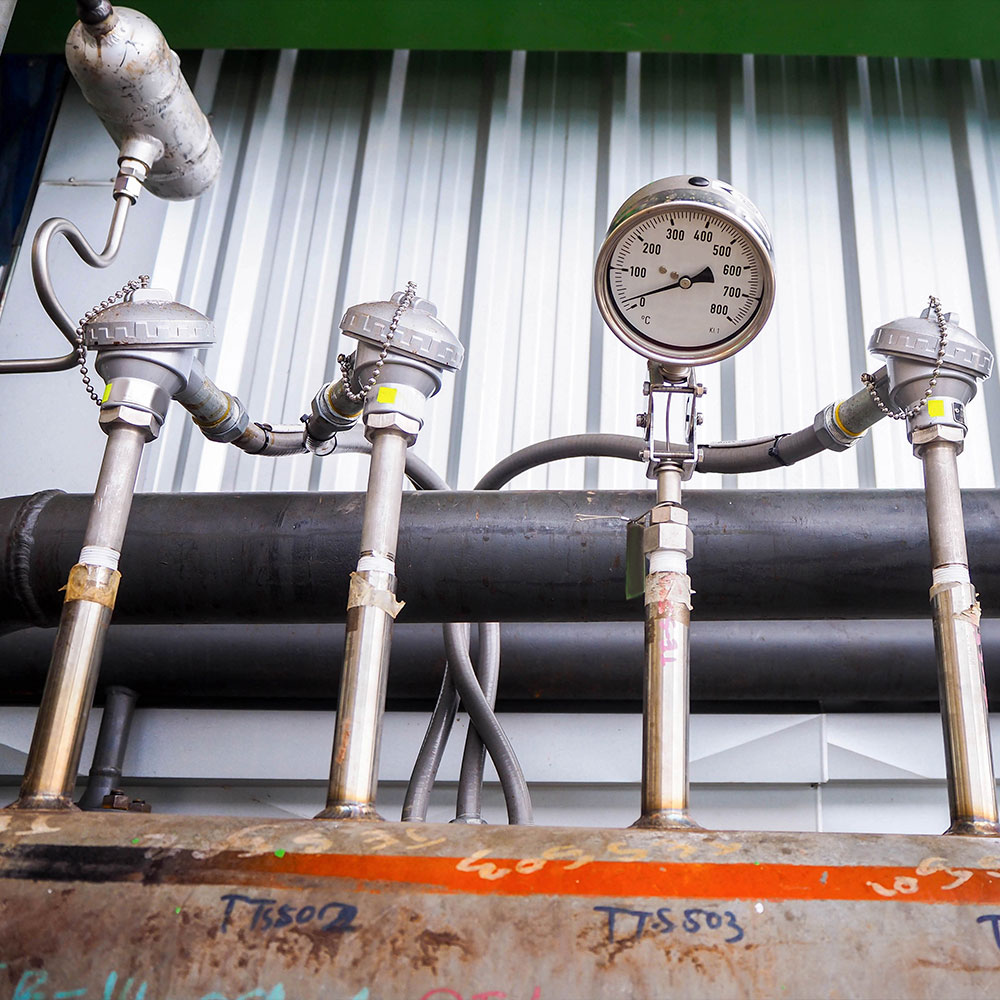
Our team has developed sensors adapted to each of these industries, considering not only the measurement but also the integration with the control system.
Custom thermocouples for each process
At Comind Industries we manufacture custom thermocouples, adapting:
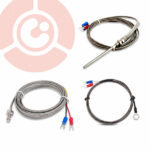
- Sheath length
- Probe diameter
- Sheath material (stainless steel, Inconel, ceramics)
- Process connection (thread, flange, quick connect)
- Extension wiring
- Connection head (plastic, aluminum, steel, IP65 or IP67)
We also offer dual sensors, sheathed thermocouples or combinations with RTDs for processes that require redundancy or dual-channel monitoring.
Certifications, materials and quality standards
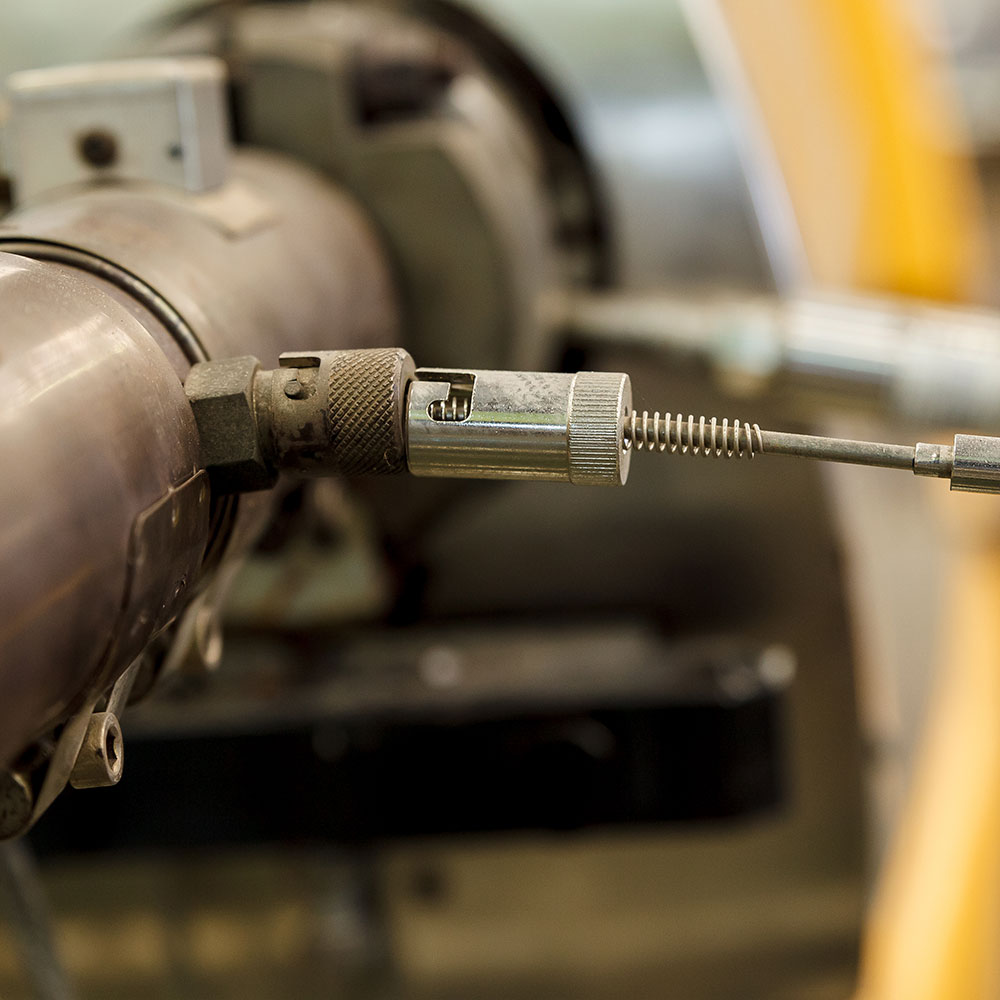
Our thermocouples are built to international standards such as:
- IEC 60584
- ANSI MC96.1
- NEMA and ASTM
All materials are industrial grade, and we offer full traceability and a calibration certificate on request.
We can also manufacture ATEX-protected or explosion-proof models for hazardous areas.
Why choose Comind Industries as your thermocouple manufacturer?
- Over 30 years manufacturing heaters and thermal sensors.
- Technical advice and custom design.
- In-house manufacturing with certified materials.
- Support for industrial, OEM and export projects.
- Lead times adjusted to your production urgency.
Our experience in electric heating gives us a deep understanding of how to integrate thermal sensors effectively. We don’t just manufacture: we advise, design and support.
Do you have a thermal challenge at your plant?
Our team is ready to help you develop a specific solution for your process, materials and operating conditions. Contact us for personalized advice on your project.