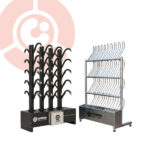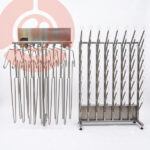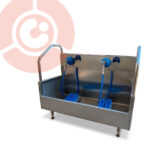
Proper management of safety footwear has become a key factor for safety, hygiene and operational continuity across many industries. Industrial boot dryers are an increasingly valued solution for companies looking to reduce occupational risks, optimize working time and extend the service life of their personal protective equipment (PPE).
A challenge across industry: moisture, hygiene and safety
In sectors such as mining, food processing, construction, energy and industrial maintenance, intensive use of safety boots is part of everyday work. However, moisture built up over long shifts and contact with water, oils or high-condensation environments create a recurring problem: wet, cold footwear with a risk of bacterial growth. This is not only uncomfortable for workers; it can also lead to:
- More skin conditions.
- Faster wear of safety footwear.
- Risks such as slips and loss of thermal or electrical insulation.
- Non-compliance with internal hygiene and safety rules.
Against this backdrop, industrial boot dryers are a technical solution to a concrete operational need.
Why are boot dryers a trend in industrial safety?
The trend in occupational health and safety is toward preventive, efficient and standardizable solutions. In that context, industrial boot dryers help ensure PPE is in optimal condition for every shift, reducing improvisation and downtime.
Key operational benefits
- Even, controlled drying, without damaging materials or safety components.
- Less odor and internal moisture, improving footwear hygiene.
- Longer boot life, lowering replacement costs.
- PPE ready to use, especially in rotating shift systems.
- Safer, more comfortable workplaces.
From a management standpoint, these units support compliance with industrial safety, occupational hygiene and worker well-being protocols.
Industrial application: a solution for operations of any size
One of the main strengths of industrial boot dryers is their versatility: they can be deployed both at small sites and in large production facilities.
Boot dryers for small and medium operations
In workshops, maintenance facilities or sites with small crews, lower-capacity dryers make it possible to:
- Make the most of limited space.
- Centralize footwear drying at the end of each shift.
- Keep basic but effective control of PPE.
These solutions are ideal for companies that want to raise their safety standards without large upfront investments.
Boot dryers for large industries and intensive operations
In industries with high staff turnover or harsh environmental conditions, such as mining or large-scale industrial plants, higher-capacity boot dryers are needed.
There, they help standardize processes, cut waiting times and ensure operational continuity.
Technology applied to PPE care
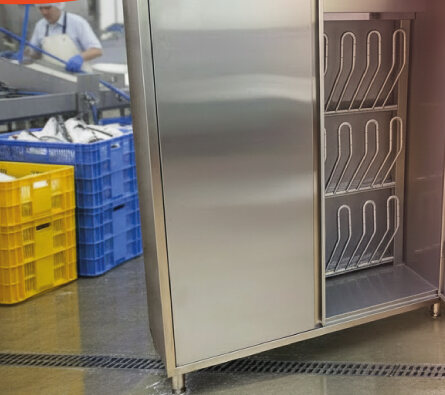
Today’s industrial boot dryers combine controlled heating and air circulation, ensuring efficient drying without compromising the integrity of the footwear. This technology avoids informal practices—such as drying with direct heat—that can damage boots and reduce their protective capacity.
From a technical perspective, it is a solution aligned with the evolution of industrial supplies focused on prevention rather than fixing problems after the fact.
Comind and its focus on functional industrial solutions
In line with these market needs, Comind has developed a range of industrial boot dryers suited to industries of different sizes, prioritizing criteria such as:
- Robustness for demanding environments.
- Energy efficiency.
- Ease of installation and use.
- Compatibility with different types of safety footwear.
More than an accessory, these units become part of an industrial safety strategy, reinforcing companies’ commitment to caring for their workers and optimizing their processes.
Explore our line of industrial boot dryers.